The ways in which we say goodbye to our loved ones have undergone a significant transformation over recent decades. While funerals were once defined by rigid traditions, modern services increasingly focus on personal reflection and celebrating a unique life. Understanding the evolution of funeral services from traditional to modern approaches can help families navigate how best to honour those they have lost.
The Enduring Dignity of Traditional Services
Historically, British funerals followed a strict, sombre protocol. Traditional services typically involved a formal church ceremony, black attire, a horse-drawn hearse, and a standard cemetery burial. The tone was deeply solemn, focused heavily on mourning, religious rites, and structured liturgy. For many families, these timeless rituals still provide a profound sense of comfort, structure, and respect during a period of immense grief. They offer a familiar framework that guides mourners through their loss, connecting them to generations of shared community customs and cultural heritage.
The Rise of the Modern Celebration of Life
However, contemporary trends reflect a distinct shift towards highly personalised “celebrations of life.” Today, modern approaches often swap the traditional black dress code for bright colours, reflecting the deceased’s unique personality, hobbies, or even their favourite football team. Services are no longer strictly confined to traditional places of worship; they are frequently held in natural woodlands, tranquil gardens, or local community centres.
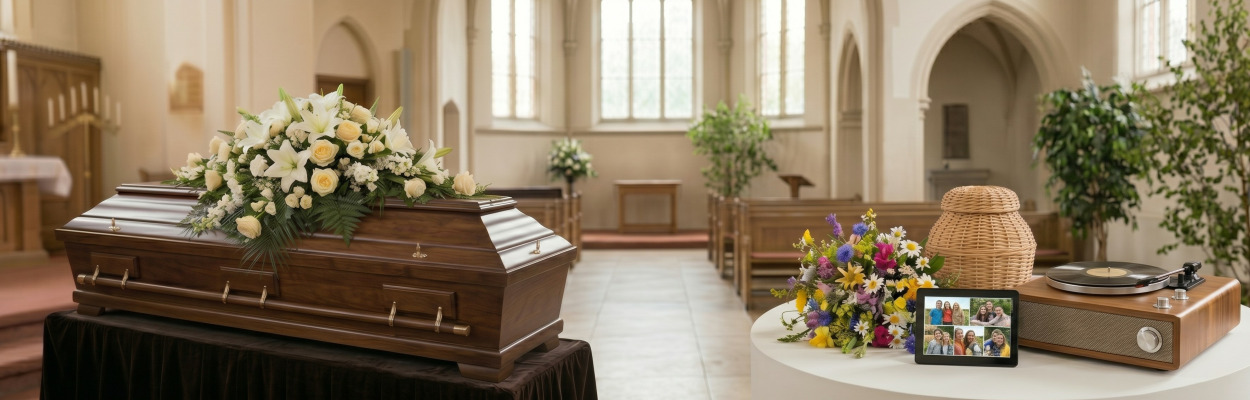
Cremation has also significantly overtaken burial in popularity across the UK, giving rise to options like direct cremations and eco-friendly green burials that minimise environmental impact. The sensory experience of a funeral has evolved too. Uplifting anthems, classic rock, or acoustic live music regularly replace traditional hymns. Families often decorate the service space with deeply meaningful items, such as a retro record player to symbolise a lifelong love for music, or digital photo frames displaying cherished family pictures.
Embracing Technology and Shared Remembrances
Technology has played a massive role in this evolution, bridging the gap between old and new customs. From livestreaming services for overseas relatives to creating permanent digital memorial spaces, the digital age has changed how we grieve together.
While local newspapers were once the sole method of sharing the news, families now prefer the reach and permanence of online announcements. If you are currently organising a service and need to inform the community, you can easily place a notice online to share details, collect funeral donations, and gather comforting memories.
Ultimately, there is no right or wrong way to plan a funeral. Whether you find solace in the time-honoured traditions of a formal service or prefer the creative freedom of a modern celebration, the most important aspect is that the farewell feels authentic. Combining elements of both approaches is often the perfect way to respect the past while celebrating a life uniquely lived.